
Contact lens accessories
Showing 60 items


£12.00

Contact lens solution is essential for disinfecting reusable lenses, such as monthly or bi-weekly contact lenses. There are different types of contact lens solutions you can choose from multi-purpose, hydrogen peroxide, and separate cleaning and conditioning solutions, depending on your prescribed lens type and lifestyle.
Contact lens solutions are manufactured by eye health specialists such as Alcon, Bausch & Lomb and CooperVision.
Benefits of Contact Lens Solutions
Types of Contact Lens Solution
Which Contact Lens Solution Is Best for You?
How to use Contact Lens Solution
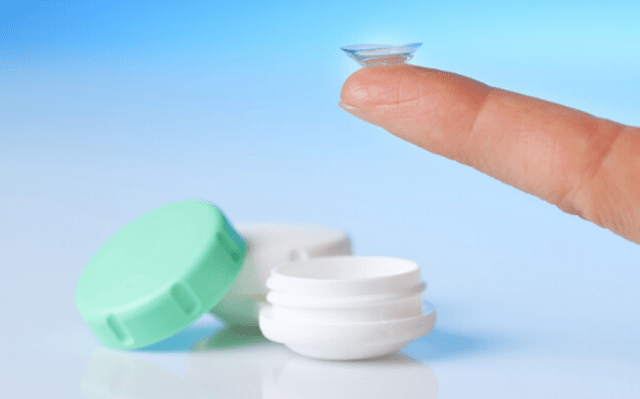
Benefits of Contact Lens Solutions
Maintenance - Using the right solution will ensure that your two weekly contact lenses last for 14 days and your monthlies for 30 days.
Hygiene - Removes protein and lipid buildup that appears naturally in your eyes, as well as make-up, and disinfects to keep your eyes healthy. Contact lens solutions will kill unwanted bacteria to prevent infections.
Moisturising - Keeps your lenses hydrated for a lasting feeling of freshness.
Types of Contact Lens Solutions
Choosing the right type of solution depends on whether you wear soft lenses or rigid gas permeable (RGP lenses). You can find this information on your contact lens prescription or ask your optician to confirm.
Lenstore offers contact lens solutions for both types of lenses.
Solutions for Soft Contact Lenses
Soft contact lenses are made from thin and flexible material to provide comfort during wear. If you wear reusable contact lenses, you will need to follow a simple cleaning regime to keep your eyes healthy. Your optician will advise you which type of solution works best for your eyes, and assist you, especially if you have sensitive eyes or allergies.
Below, we explain the different types of contact lens solutions for cleaning and storing soft contact lenses:
Multi-Purpose Solution
Multi-purpose solutions are an easy option for storing soft reusable contact lenses.
They are simple to use, you can rinse, clean, disinfect and store your lenses with this system. Rinse and gently massage your lenses with fresh solution to help dislodge unwanted debris or deposits, before storing them in a clean lens case, filled with enough solution to cover the lenses completely. You can let them soak overnight or just for a few hours if you want to rest your eyes during the day.
Most wearers of reusable contact lenses prefer multi-purpose solutions to clean and disinfect their lenses for ease of use.
Hydrogen Peroxide Solution
Hydrogen peroxide solutions disinfect your lenses completely and allow for a thorough cleaning cycle. There are two variations of Hydrogen Peroxide to ensure this:
Solution that comes with a special lens case, which includes a neutralizing disc, such as AOSept Plus with HydraGlyde.
Solution that comes with a neutralizing tablet, which can be added to a barrel case, such as Oxysept.
It is effective against harmful microbes, such as acanthamoeba which can lead to an eye infection called acanthamoeba keratitis.
Users of hydrogen peroxide solution prefer this option because they make their reusable lenses feel like new every day, even after wearing them for three weeks. Hydrogen Peroxide solution is free of preservatives, which makes it a great choice for contact lens wearers with allergies.
Solutions for RGP Lenses
RGP contact lenses are made from sturdier material without water content and solutions made for soft lenses cannot be used to safely clean your RGPs. It is important to follow your optician's recommendations for the ideal solution to avoid irritation or redness.
Below, we explain the different types of contact lens solutions to care for RGP contact lenses:
Multi-Action (All in one)
The Multi-Action solution is a convenient option when caring for hard lenses, as one bottle can clean, disinfect and condition your lenses. The solution provides wetting agents to keep RGP lenses moisturised for improved comfort during wear.
Multi-action solution is safe to come in contact with your eyes, although RGP lens wearers with sensitive eyes may wish to rinse the lenses with additional saline solution before insertion.
Cleaner and Conditioner
These are separate products and offer a 2-step process in cleaning RGP lenses.
Step 1 - The cleaning solution: this can be used to clean your lenses before storing them. However, this solution can’t come in direct contact with your eyes and most opticians recommend rinsing the lenses with saline solution, before moving to the conditioning solution.
Step 2 - The conditioning solution: this is used to store and neutralise the lenses overnight, as well as keep them moisturised and comfortable. It can also be used as a moisturizing cushion between the eye and the contact lens for added comfort during wear, so most opticians recommend putting a drop of this on the lens before insertion.
Which Contact Lens Solution Is Best for You?
Contact lens solutions play an important role to prevent infections and to keep your eyes healthy and hydrated, as well as ensuring continual comfort and use of your reusable lenses.
There are many contact lens solutions and it can be difficult to decide which one will work best for you. So, to make your decision easier, our in-house opticians have prepared some recommendations below.
Top 5 Bestsellers
Our five best-selling contact lens solutions are the following:
Options Multi is a popular solution manufactured by CooperVision and available in triple packs (3x250ml). This is a multi-purpose solution for soft contact lenses that disinfects and protects your eyes from bacteria. Options Multi is designed to imitate the pH level of tears and to remove protein buildup, which helps to reduce irritation and dryness.
The Hy-Care solution is a multi-purpose solution manufactured by CooperVision and designed to keep your soft contact lenses disinfected and hydrated. It contains hyaluronan, a natural lubricant that can also be found in the eye, to prevent dryness to deliver comfort throughout wear. Hy-Care multi-purpose solution is available as a single(250ml) or triple pack (3x250ml).
ReNu Multi-Purpose solution is for soft lenses and was designed by Bausch & Lomb to emulate the lubricating agent of tears, keeping your contact lenses hydrated. It also removes unwanted bacteria and germs from the lenses. ReNu Multi-Purpose solution is available in a single (240ml), triple (3x240ml), handy (120ml), and small pack (60ml). It is also available as a flight pack with 2x60ml bottles, 2 lens cases and a clear zip-lock bag.
BioTrue is a multi-purpose solution from Bausch & Lomb, specifically designed with a bio-inspired technology that removes unwanted protein build-up from soft contact lenses but keeps beneficial proteins and minerals active. This provides a natural feeling during wear. The solution is available in a single(300ml), twin (2x300ml) or triple pack (3x300ml), as well as a flat pack (240ml) and a flight pack with 2x60ml, 2 lens cases and a clear zip-lock bag.
This multi-action cleaner is suitable for cleaning and storing RGP lenses. Total Care Daily Cleaner is a cleaning solution that can be used to remove any dust or unwanted bacteria from your RGP lenses to prevent discomfort and keep your eyes happy. It must be used in combination with a conditioning solution, as the cleaning solution cannot come in direct contact with your eyes.
Recommended for dry or red eyes
If your eyes are sensitive and you suffer from dryness and redness, using specific solutions may be able to relieve you from irritation. Everyone’s eyes are different and some solutions might work better for some and not as well for others, therefore, it is very important to follow your optician’s recommendations and advice for lens care.
ReNu Multi-Purpose Solution - ReNu Multi-Purpose Solution was designed for sensitive eyes and is suitable for all soft contact lenses. This solution restores the fresh feeling of wearing a new lens every day, especially when you wear your lenses for up to two weeks or one month. This reduces the risks of irritated and tired eyes.
Recommended for cleaning deposit build-up
It is natural to find protein buildup at the end of the day when you take out your reusable lenses. This can be removed with the right solution. Please note that we strongly recommend you follow your optician’s advice for the best contact lens and solution combination.
Opti-Free RepleniSH - Opti-Free RepleniSH is a multi-purpose solution for soft contact lenses manufactured by Alcon. Place your lenses in the palm of your hand and use the solution to gently rub and remove any unwanted protein and deposit build-up. This prevents fatigue by keeping your eyes feeling fresh during wear.
Recommended for a busy lifestyle
Cleaning your lenses before going to bed may seem like a hassle. Some solutions can be used without the extra step of rubbing away deposits to make lens care as quick as possible. Please always follow your optician’s advice on how to clean and store your lenses.
Opti-Free Express - Opti-Free Express is multi-purpose solution and was developed with innovative technologies to combine cleaning and moisturising purposes. You can simply soak the lenses in a lens case filled with fresh solution overnight. Opti-Free Express solution lets you clean your lenses effortlessly without rubbing them. Please note, that most opticians still recommend rubbing your contact lenses to ensure a deeper cleaning.

How to use Contact Lens Solution
All types of solutions require different cleaning regimes. Always clean your lenses according to the recommendations of your optician.
However, to give you some guidance, we provided an overview explaining how to use contact lens solutions for the most commonly used solution types.
Always make sure to wash and dry your hands, ideally with a kitchen roll to avoid getting lint and fluff on your fingers, before handling your lenses.
Multi-Purpose Solution
This convenient option is very easy to use.
Simply remove the lens with clean hands, place it in the palm of your hand with a few drops of the solution and rub carefully to remove any build-up. After, you can store it in a flat or barrel contact lens case, filled with a clean solution. You can store the lenses overnight, or just for a short amount of time if you want to rest your eyes during the day.
When you reinsert the lenses the next morning, make sure to empty the lens case and let it air dry during the day.
Multi-Purpose solution is safe to come in contact with your eyes.
Hydrogen Peroxide Solution
Hydrogen peroxide solution is a great method to disinfect your soft contact lenses, however, you need to follow the instructions and avoid getting the solution in your eyes.
Remove your lenses with clean hands and place them in a barrel lens case with fresh solution, filled up to the indication line.
Hydrogen peroxide solution comes with a barrel case that either has a built-in platinum disc to activate the ingredients and neutralise the peroxide or with a separate neutralising tablet that needs to be added to the peroxide solution in a standard barrel case.
For both variations, always keep the lenses in the solution for at least 6 hours, to ensure enough time has passed for the solution to neutralise. It is important to allow for this amount of time to pass so the peroxide won’t affect your eyes.
If you have sensitive eyes, you may wish to rinse the lenses with saline solution before putting them in your eyes the next morning. Empty the lens case of the solution and let it air dry during the day.
Rigid Gas Permeable Lens Solution
If you are using a multi-action solution:
Remove your RGP lens and place it in the palm of your clean hand. Add a few drops of multi-action solution and rub the lenses gently.
Place the lens in a lens case with a fresh multi-action solution and let it soak for at least six hours to fully disinfect. You may wish to rinse the lens with saline solution before reinsertion, for added comfort.
If you are using separate cleaning and conditioning solutions:
Remove the lens and place it in the palm of your clean hand. Add your cleaning solution and rub the lenses gently.
Rinse the lens with saline solution before placing it in a lens case with fresh conditioning solution and let it sit for at least 6 hours to fully disinfect it. You may wish to rinse the lens with saline solution after disinfecting it, for added comfort.
Saline Solution
Saline Solution cannot be used to clean and store contact lenses, but rather to rinse RGP lenses after cleaning, or soft lenses after storing them in a Hydrogen Peroxide Solution. Saline is a mild saltwater solution that matches the pH level of tears and ensures that your lenses keep your eyes healthy and comfortable after disinfecting.
You cannot supplement saline solution with homemade alternatives, as water contains bacteria that may cause infections.
FAQs
Which Contact Lens Solution is Preservative-Free?
Hydrogen peroxide solutions are preservative-free. Lenstore does not offer any preservative-free multi-purpose solution.
If you are allergic but want to use monthly or bi-weekly lenses, you may want to ask your optician about hydrogen peroxide solution.
Can I use Contact Lens Solution as Eye Drops?
It is not recommended to use contact lens solution as eye drops, it will not have any long-lasting effect to relieve your dry eyes and may run the risk of touching your eyes with the nozzle of the bottle and thereby scratching your cornea. Over-the-counter wetting eye drops will be more suitable to relieve dry or irritated eyes.
If you have lasting discomfort, we advise that you ask your optician for recommendations. Your optician will be able to advise you on eye drops that are compatible for use with contact lenses.
Please, feel free to ask our opticians for advice, if you are unable to make an appointment with your optician.
Does Contact Lens Solution Expire?
Yes, the contact lens solution expires. It is also important to note that most multi-purpose solutions should be disposed of after 3 to 6 months of opening, depending on the product. Always check the instructions to confirm.
Hydrogen peroxide solution is preservative-free and should be disposed of 3 months after opening.
Do I Need to Buy a Contact Lens Case separately?
Some contact lens solutions come with complimentary lens cases, especially in twin or triple packs, as well as convenient flight packs. Most flat-pack solutions do not include a lens case.
Lenstore offers separate flat and barrel lens cases.
Is there an alternative to Contact Lens Solution?
There is no household alternative to contact lens solutions. Do not use DIY solutions or tap water to rinse and clean your lenses, as this can cause eye infections.
 My account
 Help & order information
 About Lenstore