Extended wear contact lenses, explained

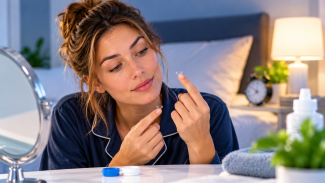
Most contact lenses come out before bed. Extended wear contact lenses are the exception. With your optician's sign-off, you can leave them in overnight and wake up already able to see the clock across the room. There is a catch, though. A closed eye gets far less oxygen than an open one. So the idea only works because of what these lenses are made from, and how many nights you are cleared to wear them.
Ortho-k lenses explained: clear days without daytime lenses

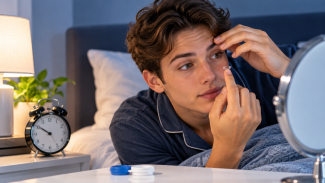
Most contact lenses do their job while they sit in your eyes. Ortho-k lenses work the other way round. You wear them overnight. You take them out when you wake up. Then you go through the whole day seeing clearly, with nothing in your eyes at all.

It sounds almost too neat, so it helps to know what's really going on. Here's how ortho-k lenses work, who they suit, and why they start with an optometrist rather than an online order.

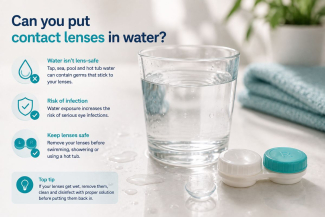
Can you put contact lenses in water?

You've run out of solution at bedtime, or you're about to jump in the pool with your lenses still in. People ask us the same thing all the time: can you put contacts in water, even for a minute? The honest answer is no. Contact lenses and water don't belong together, whether that's tap water, bottled water, or the pool, sea, or shower. Here's why that rule matters, and what to do when you're caught short.

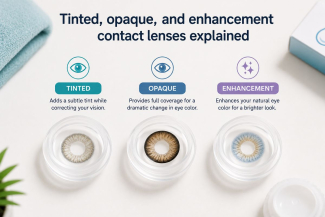
Tinted, opaque, and enhancement contact lenses explained

Shopping for coloured contact lenses and tripping over the labels can be genuinely confusing. The words 'tinted', 'enhancement', and 'opaque' get used as if you already know them. You don't have to, and sorting them out is easier than it first looks. Each type changes your eyes in its own way and by a different amount. So the right choice really comes down to how big a change you want, from a barely-there lift to a whole new eye colour by Friday night.

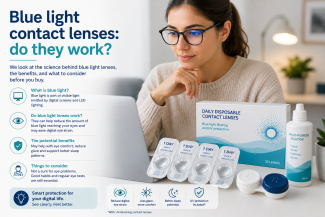
Blue light contact lenses: do they work?

Quick answer: blue light contact lenses use a tint or coating that absorbs a portion of the high-energy light coming from screens, but the evidence that this actually reduces digital eye strain, protects your macula, or improves sleep is thin. UK and US eye health bodies do not currently recommend them on the strength of that evidence. If screens are leaving your eyes tired, the bigger wins come from your screen habits and, for contact lens wearers, choosing contacts built for comfort during long digital sessions.