

First time wearing contact lenses: a beginner's guide
Getting your first contact lens prescription is a genuinely exciting moment. Glasses-free vision, no frames fogging up in the cold, and the freedom to wear any sunglasses you like. Millions of people across the UK wear contact lenses every day, and once you've found your routine, it's easy to see why.
The first insert can feel nerve-wracking. Touching your eye doesn't come naturally to most people. But with the right technique and a little patience, it becomes second nature faster than you'd expect. Here's everything you need to know.
Before you start: what you'll need
Set yourself up for success. Before you put your first lens in, make sure you have everything to hand:
- Your contact lenses (in their original sealed packaging)
- A clean, flat surface such as a bathroom counter
- Mild, fragrance-free soap and a clean towel
- A mirror (a magnifying mirror is especially helpful to begin with)
- Contact lens solution, if you're using reusable lenses. Browse our contact lens solutions at Lenstore.
- A lens case, if you're using reusable lenses
One important thing before we go any further: you need a valid contact lens prescription from a registered optician. Contact lenses are medical devices, and getting the right fit matters for both your vision and your eye health. If you haven't had a contact lens fitting yet, your optician will walk you through the process, including a trial period with your chosen lenses.
How to put in contact lenses for the first time
Follow these steps every time you insert your lenses and they'll quickly become routine.
- Wash your hands thoroughly with mild soap and water. Dry them with a clean, lint-free towel.
- Open the lens packaging carefully. For daily lenses, the lens sits in a small blister pack of saline solution.
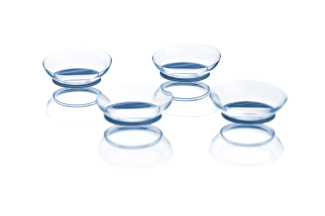
- Place the lens on the tip of your index finger. Check it's the right way out. It should look like a smooth bowl. If the edges flare outwards, it's inside out. Simply flip it over.
- Use your other hand's middle finger to gently pull down your lower eyelid.
- Use the middle finger of your lens-holding hand to lift your upper eyelid.
- Look straight ahead, or slightly upward, and place the lens directly onto your cornea, the coloured part of your eye.
- Release your eyelids slowly and blink a few times. The lens should settle comfortably into place.
- Repeat on the other eye.
Always insert the same lens first. Most people start with their right eye. This way, you'll never mix up which is which.
For a full overview of safe lens wear, take a look at our contact lens wearing guide.
Choosing the right contact lenses for beginners
Not all contact lenses are the same. The type your optician prescribes depends on your prescription, your lifestyle, and your eye health. Here's a quick overview to help you understand your options.
Daily disposable lenses
The most beginner-friendly option. You wear a fresh pair each day and throw them away at night. No cleaning, no storage, no fuss. They're also a great choice if you have allergies, since there's no build-up of deposits over time. Popular options include 1 Day ACUVUE MOIST and Dailies AquaComfort Plus.
→ Internal link: Shop all daily contact lenses
Two weekly and monthly lenses
These lenses are worn daily and cleaned each night. They require a little more care, but they're popular with regular wearers who prefer a cost-effective long-term routine. Biofinity is a well-regarded monthly option, especially for longer wear days.
Explore two weekly contact lenses or monthly contact lenses at Lenstore.
Lenses for astigmatism
If you have astigmatism, your optician may prescribe toric contact lenses. These are specially designed to correct the uneven curvature of your eye and are available as dailies or monthlies. The 1 Day ACUVUE MOIST for Astigmatism is one of our most popular options for first-time toric wearers.
Multifocal lenses
If your prescription includes a correction for both distance and reading, your optician may recommend multifocal contact lenses. These work similarly to varifocal glasses, with different zones built into a single lens.
Coloured contact lenses
Coloured contact lenses are available with and without a prescription. They follow the same care and wear guidelines as standard lenses, so everything in this guide applies.
Silicone hydrogel lenses
Many modern lenses are made from silicone hydrogel, a material that allows more oxygen to reach your cornea for greater comfort during longer wear days. ACUVUE Oasys 1 Day and ACUVUE OASYS MAX 1-Day are both excellent examples of this technology.
Your optician will have already recommended the best type for you. If you're unsure, ask them at your fitting. Getting this right from the start makes the whole experience much smoother.
How to remove contact lenses
Removing your lenses is just as important to get right. Here's how:
Wash and dry your hands.
- Look up and pull down your lower eyelid with your middle finger.
- Using the tip of your index finger, gently touch the lower edge of the lens.
- Pinch the lens lightly between your index finger and thumb and slide it down and off your eye.
- For daily lenses, discard after use. For reusable lenses, clean and store them immediately.
If a lens feels stuck, don't panic. Add a few drops of contact lens-compatible eye drops, blink a few times, and try again. Never try to force a lens off.
How long should you wear contact lenses the first time?
Build up your wear time gradually. Your eyes need time to adjust, and jumping straight into a full 12-hour day is likely to cause discomfort.
- Day 1 to 2: aim for 2 to 4 hours
- Day 3 to 4: increase to 4 to 6 hours
- Day 5 to 7: work up to a full day's wear (usually 8 to 10 hours, depending on your lenses)
Your optician will give you specific guidance based on the lenses you've been prescribed. Always follow their advice. If anything feels wrong, such as soreness, redness, or blurry vision, remove your lenses and call your optician.
Contact lens care: the basics
For daily disposable lenses, care is simple: wear them, discard them. Job done.
For reusable lenses, you'll need to build a nightly cleaning routine:
- Wash your hands before handling lenses.
- Place each lens in your palm, add a few drops of multipurpose solution, and rub gently for 20 seconds.
- Rinse the lens with fresh solution.
- Place each lens in a clean lens case filled with fresh solution.
- Soak overnight. Discard the used solution each morning. Never top it up.
If your optician has recommended a hydrogen peroxide system, browse our hydrogen peroxide contact lens solutions for the right product.
Never use tap water to rinse your lenses or lens case. Tap water can contain microorganisms that cause serious eye infections.
Things to avoid when wearing contact lenses
Good habits from day one make a real difference to your eye health. Here's what to steer clear of:
- Sleeping in your lenses (unless you've been prescribed extended-wear lenses for overnight use)
- Wearing lenses beyond their recommended replacement schedule
- Swimming or showering while wearing lenses, as water carries bacteria
- Touching your eyes with unwashed hands
- Using tap water to rinse lenses or your lens case
- Sharing lenses with anyone else
- Wearing lenses when your eyes feel red, sore, or irritated
What's normal, and what isn't
When you first start wearing contact lenses, a little awareness goes a long way.
- Mild awareness of the lens on your eye
- Slightly watery eyes at first
- Taking a few attempts to insert or remove the lens
Normal when starting out
Speak to your optician if you notice
- Persistent redness or soreness
- Blurry vision that doesn't clear when you blink
- Unusual discharge or sensitivity to light
- A lens that still feels uncomfortable after it settles
If you experience any sharp pain or significant vision changes, remove your lenses immediately and seek advice from your optician or an eye casualty unit.
You can also request an appointment through Lenstore if you need guidance.
Supporting your eye health long term? Take a look at our range of eye vitamins to complement your daily routine.
Frequently asked questions
How long does it take to get used to wearing contact lenses?
Most people adapt within 1 to 2 weeks of regular wear. In the first few days, you'll notice the lens on your eye. That sensation usually fades quickly as your eye adjusts. The bigger learning curve tends to be insertion and removal, but with practice that becomes quick and automatic. Give yourself a few days before judging whether contact lenses are right for you.
Can I wear contact lenses if I have astigmatism?
Toric contact lenses are specifically designed for people with astigmatism. They have different powers in different meridians of the lens to correct the uneven curvature of your eye, and they're designed to stay in the correct orientation when you blink. They're available in daily and monthly formats. Your optician will confirm whether toric lenses are suitable and prescribe the correct parameters for your eyes.
Is it safe to wear contact lenses every day?
Yes, for the vast majority of people. Millions of people across the UK wear contact lenses as part of their daily routine without any issues. The key is sticking to the recommended wear schedule, keeping up with hygiene, and giving your eyes a rest when needed. If you ever notice discomfort, redness, or changes to your vision, remove your lenses and speak to your optician.
What do I do if my contact lens folds or gets stuck in my eye?
First, stay calm. A soft contact lens cannot go behind your eye. If the lens has folded or moved off your cornea, add a drop or two of contact lens-compatible eye drops and blink several times. This usually shifts the lens back into place. If you can see where the lens has moved to, wash your hands and try to gently slide it back to the centre of your eye before removing it. If you're still struggling after a few attempts, contact your optician.
Can I wear contact lenses with dry eyes?
Many people with mild to moderate dry eyes wear contact lenses comfortably. The key is choosing the right lens material and using eye drops designed for use with contact lenses to keep your eyes lubricated throughout the day. Silicone hydrogel lenses and daily disposables are generally better tolerated by dry-eye wearers. Speak to your optician before starting, as they can recommend specific lens types and advise on whether contact lens wear is appropriate for your level of dryness.
How do I know if my contact lens is inside out?
Balance the lens on your fingertip and look at it from the side. If it forms a smooth, even bowl with edges that curve straight up, it's the right way round. If the edges flare outwards like a soup plate, it's inside out. Flip it over before inserting. Some lenses also have a small '123' laser marking on the edge. If you can read the numbers normally, rather than as a mirror image, the lens is correctly oriented. Inserting a lens inside out won't cause any harm, but it's likely to feel less comfortable.
Can I fall asleep in my contact lenses?
Unless your optician has specifically prescribed extended-wear lenses for overnight use, you should always remove your lenses before sleeping. Sleeping in standard lenses significantly reduces the supply of oxygen to your cornea, which increases the risk of infection and other complications. Even an unplanned nap can cause discomfort. If you do wake up with lenses in, add a few drops of rewetting solution before trying to remove them, and allow your eyes to recover before wearing lenses again.
When should I replace my contact lenses?
Always follow the replacement schedule prescribed for your specific lenses. Daily lenses should be discarded after a single use. Two weekly lenses should be replaced every 14 days, even if you haven't worn them every day. Monthly lenses should be replaced every 30 days from first opening. Wearing lenses beyond their replacement date increases the risk of deposits, discomfort, and infection.
What's the difference between daily and monthly contact lenses?
The main differences are convenience and cost. Daily lenses are worn once and discarded, which means no cleaning and a fresh lens every morning. They're ideal for beginners, occasional wearers, and people with allergies. Monthly lenses are worn daily and cleaned each night, and tend to work out more cost-effective over time for full-time wearers. Both types are available in a wide range of prescriptions and materials. Your optician will recommend the most suitable option based on your eyes and lifestyle.
Can I swim or shower in contact lenses?
No. Water, whether from a swimming pool, the sea, a shower, or a tap, can carry microorganisms that cause serious eye infections. Acanthamoeba keratitis is a rare but severe infection linked to water exposure while wearing contact lenses. Always remove your lenses before swimming or showering. If your lenses do come into contact with water, remove them, clean them thoroughly if they're reusable, and monitor your eyes for any signs of irritation.
Can I use eye drops with contact lenses?
Yes, but only drops that are specifically labelled as safe for use with contact lenses. Standard eye drops, including many available over the counter, are not suitable for use while wearing lenses as they can damage the lens material or cause irritation. Browse our range of eye drops at Lenstore to find options compatible with contact lens wear.
What should I do if my eyes feel red or irritated while wearing lenses?
Remove your lenses immediately. Redness and irritation are your eyes telling you something isn't right. Check the lens for damage or debris, clean it thoroughly if it's a reusable lens, and wait until your eyes have settled before trying again. If the redness persists after removing the lens, or if you experience any pain, discharge, or changes to your vision, contact your optician. Never continue wearing a lens in an uncomfortable eye.
Where can I find answers to more questions?
Head to our FAQs page for more information on ordering, prescriptions, and lens care.
Ready to get started?
Most people wonder what the fuss was about once they've put their lenses in a handful of times. Take it steady, follow your optician's guidance, and trust the process.
When you're ready to stock up, Lenstore stocks a wide range of daily, two weekly, and monthly contact lenses from all the brands you trust. Find out more about how to order, and check our delivery and postage options so you're never caught short.