

How menopause affects your eyesight

Greek philosopher Heraclitus once said, "Change is the only constant in life." Whether it is your body, your career, or even your eyesight, at some point in life, it is a given that change will occur. For women, one of the most prominent periods of change often happens in their late 40s or 50s when menopause sets in. This naturally occurring hormonal transition has a wide range of symptoms that can cause issues and unexpected shifts both physically and mentally.

Notable figures in eye care - Isaac Newton

Sir Isaac Newton – (1642 - 1727)

Isaac Newton was born in Lincolnshire, England, on Christmas Day, 25th December 1642 (Julian calendar or 4th Jan 1643 - Gregorian). Regarded as a prominent figure in the Enlightenment, Isaac Newton was a natural philosopher whose research touched everything from alchemy and physics to mathematics and optics. The son of a farmer who died before Isaac’s birth, Isaac’s mother remarried but left him to be raised by his maternal grandmother. 

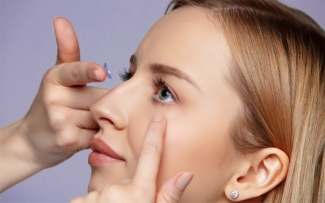
Top tips and hacks to get over your fear of Contact Lenses

With millions of wearers around the world, contact lenses are one of the most trusted and easiest-to-use methods of vision correction. And with the comfort and convenience they provide, it's easy to see why many of us prefer reaching for our contacts instead of our glasses. 

However, despite being loved by many for their ease and convenience, the process of inserting and removing contact lenses can be a tricky task - even feared by some, with many avoiding wearing them completely due to horror stories often featured in the media. 

12 common eye conditions: What they look like and how to spot them

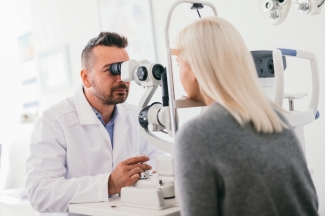
What is World Sight Day?

World Sight Day is an annual event. It raises awareness of sight loss and why it helps to look after your eyes. The International Agency for the Prevention of Blindness (IAPB) has run it since 2000, under the long-running theme #LoveYourEyes.

The aim? To get millions of people to book an eye test and take simple steps to look after their sight, before small issues become bigger problems.

Are you a Tetrachromat?

Tetrachromats are able to see up to 99 million more colours than most people who can only see around 1 million. Curious? Read our guide to tetrachromacy.
Subscribe to